国际嘉宾云集 成为历史最多参与
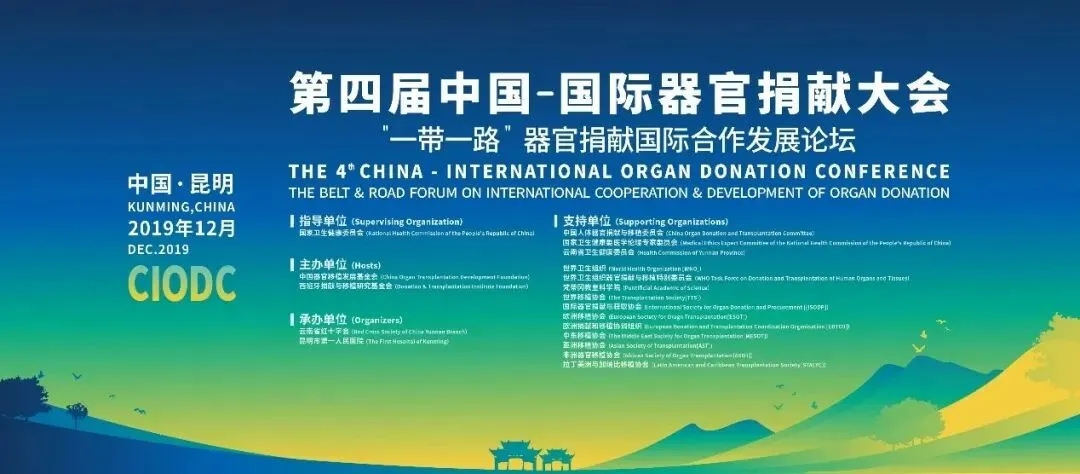
2019年12月6-8日,第四届中国-国际器官捐献大会暨“一带一路”器官捐献国际合作发展论坛在云南昆明举办。在国家卫生健康委员会的指导下,由中国器官移植发展基金会、西班牙DTI基金会联合主办,云南省红十字会、昆明市第一人民医院承办。会议得到了中国人体器官捐献与移植委员会等国内各重要机构的共同支持,来自世界卫生组织(WHO)、世界器官移植协会(TTS)、各大洲移植协会和62个国家移植协会的代表100余人,国内外专家代表约有一千余人参加大会。
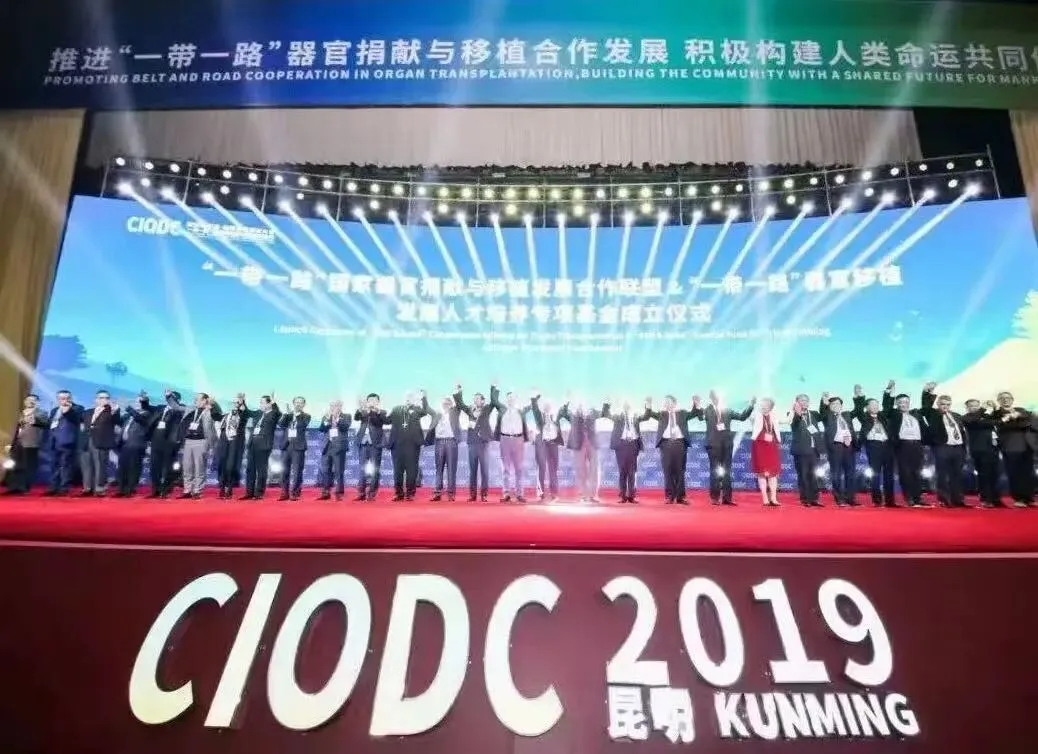
“一带一路”国家器官捐献与移植合作发展联席机制建立
大会以推进“一带一路”器官移植合作发展,努力构建“人类命运共同体”为主题,并由中国器官移植发展基金会发起建立了“一带一路”国家器官捐献与移植发展合作联席机制。该工作机制将秉持“和平合作、开放包容、互学互鉴、互利共赢”的丝路精神,结合各国社会经济发展水平与文化传统,深化器官捐献与移植国际交流,全方位推进“一带一路”沿线国家之间务实合作。
《“一带一路”器官捐献与移植国际合作发展昆明共识》发布
全体与会代表遵循“共商、共建、共享”原则,按照2019年“一带一路”国际合作峰会的精神,积极推进“一带一路”沿线国家之间人文与卫生健康领域的器官捐献与移植事业的国际交流合作,共同发表了《“一带一路”器官捐献与移植国际合作发展昆明共识》。共识指出,中国器官捐献与移植事业改革的经验和智慧得到与会国际专家的一致认可和赞许,认为这是符合中国社会经济发展的现状与中国传统文化的创新,可为具有相同文化传统及社会发展阶段的国家借鉴,可助力提升“一带一路”国家器官捐献与移植医疗技术、质量、服务水平,带动世界人体器官捐献与移植事业及其相关临床、科研、教学、技术和产业不断发展。
《昆明共识》发布以来,“一带一路” 框架下器官捐献与移植国际合作取得了系列进展。中国器官移植发展基金会积极发挥桥梁纽带作用,专门设立 “一带一路” 器官移植发展人才培养专项基金,发起专项资助项目,累计支持 70 余人次国内及 “一带一路” 沿线地区专家参与器官捐献与移植领域国际交流;同时,面向国内及沿线国家举办“一带一路”国际器官捐献领导力、质控管理及创新培训班和BROAOD“一带一路”器官捐献能力提升培训项目等,为50多个国家的800余名器官捐献从业人员提供系统性专业培训,培训班成果先后在《Clinical Transplantation》杂志上发表,并参与2023年亚洲移植协会年会学术交流,为 “一带一路” 地区器官捐献事业发展注入强劲动力。
以下为昆明共识原文
“一带一路”器官捐献与移植国际合作发展昆明共识
云南昆明
2019年12月7日
当前世界已进入全球化时代,世界各国相互依存、共同面对人类发展中面临的问题及挑战。
2019年12月6-8日在中国云南昆明,在国家卫生健康委员会指导下,中国器官移植发展基金会(COTDF)、西班牙DTI基金会(DTI)主办,云南省红十字会、云南省昆明市第一人民医院承办, 世界卫生组织(WHO)、中国人体器官捐献与移植委员会(CODTC)、世界卫生组织器官捐献与移植特别委员会(WFDT)、国际移植协会(TTS)、梵蒂冈教皇科学院(PAS) 、国际器官捐献与获取协会(ISODP)、欧洲移植协会(ESOT)、欧洲器官捐献与移植协调组织(EDTCO)、非洲移植协会(ASOT)、中东移植协会(MESOT)、亚洲移植协会(AST)、拉丁美洲与加纳比移植协会(STALYC)的支持下,成功召开了“第四届中国-国际器官捐献大会暨‘一带一路’器官捐献国际合作发展论坛”,与会代表1000余人,其中来自全球60多个国家和地区约100名国际器官移植专家参会,会议主题:推进“一带一路”器官捐献与移植合作发展,积极构建人类命运共同体。
全体与会代表遵循“共商、共建、共享”原则,按照今年4月25-27日在中国北京召开的“一带一路”国际合作峰会的精神,积极推进“一带一路”沿线国家之间人文与卫生健康领域的器官捐献与移植事业的国际交流合作,共同发表《“一带一路”器官捐献与移植国际合作发展昆明共识》(以下简称《昆明共识》)。
——中国器官移植发展基金会发起倡议,得到了参会代表的积极响应,共同建立了“‘一带一路’国家器官捐献与移植合作发展工作联席机制”。
——我们将秉持“和平合作、开放包容、互学互鉴、互利共赢”的丝路精神,结合各国社会经济发展水平与文化传统,深化器官捐献与移植国际交流,全方位推进“一带一路”沿线国家之间务实合作,尤其是按照2017年1月18日签署的《中华人民共和国政府和世界卫生组织关于“一带一路”卫生领域合作的谅解备忘录》,积极促进《世界卫生组织人体细胞、组织、器官移植最高指导原则》在全球的实施,推进世界卫生组织器官捐献与移植特别委员会(WFDT)工作。世界卫生组织器官捐献与移植特别委员会应评估器官衰竭导致移植的负担,解决“一带一路”国家的捐献与移植需求。通过评估疾病负担(和致力于器官置换),将世界卫生组织器官捐献与移植特别委员会以及重组后的世界卫生组织的工作重点围绕在全民健康覆盖上。
——中国器官捐献与移植事业改革的经验和智慧得到与会者的认可和赞许,认为这是符合中国社会经济发展的现状与中国传统文化的创新,可为具有相同文化传统及社会发展阶段的国家借鉴,可助力提升“一带一路”国家器官捐献与移植医疗技术、质量、服务水平,通过探索机制建设,带动符合《世界卫生组织人体细胞、组织、器官移植最高指导原则》的人体器官捐献与移植事业及其相关临床、科研、教学、技术和成果转化等不断发展。
——共同支持、举办和参与器官捐献与移植领域专题研讨会、国际学术论坛,积极开展人员互访、考察交流、人才培训、进修学习等多种形式的学术交流活动,加深联盟成员之间的互利互鉴、有效合作。
——鼓励世界各国之间加强器官捐献与移植领域伦理规范、法制建设,积极探索器官移植政策互通机制,创新移植领域新理论,达成共识合作。必须严禁《欧洲委员会公约》所界定的器官贩卖行为。《欧洲委员会打击人体器官贩卖公约》(部长理事会于2014年通过)规定:人体及人体部位不应成为经济利益或类似利益的来源。
——坚决支持符合伦理的器官捐献与移植,倡导器官移植技术合作交流,鼓励和赞誉充满爱心与奉献的器官捐献。
——采取多种形式共同合作、广泛宣传动员,普及器官捐献知识和理念,提升器官捐献志愿登记数量,提升器官捐献供体器官质量,提高器官捐献率。
——联席工作机制成员国家应依据世界卫生组织透明度准则,建立本国移植数据注册系统。
Kunming Consensus on International Cooperation and Development in Organ Donation and Transplant under the Framework of the Belt & Road Initiative (BRI)
Kunming, Yunnan
December 7th, 2019
In a globalized, interdependent world, all countries must work together to meet the shared challenges, for the progress of mankind.
To address the shared challenge of organ donation and transplant, a conference was held in Kunming, China, between December 6th and 8th, 2019.
Titled“the 4th China-International Organ Donation Conference (CIODC) & Belt and Road Forum on International Cooperation and Development in Organ Donation and Transplant”,the conference was jointly organized by China Organ Transplantation Development Foundation(COTDF) and the Spanish Donation & Transplantation Institute (DTI), through implementation by Red Cross society of Yunnan province and the First People’s Hospital in Kunming, with support from National Health Commission of PRC, China Organ Donation and Transplant Committee, WHO Task Force on Donation and Transplantation of Human Organs and Tissues (WFDT), The Transplantation Society (TTS), Pontifical Academy of Science (PAS), International Society for Organ Donation and Procurement (ISODP), European Society For Organ Transplantation (ESOT), European Donation and Transplant Coordination Organization (EDTCO), African Society of Organ Transplantation (ASOT), Middle East Society For Organ Transplantation (MESOT), Asian Society of Transplantation (AST), and Latin American and Caribbean Transplantation Society (Sociedad de Trasplante de America Latina y el Caribe, STALYC).
Under the theme of“Toward a Community of a Shared Future: Promoting Cooperation and Development in Organ Donation and Transplant under the Framework of the Belt & Road Initiative”,the conference brought together 800 delegates from 70 territories, including nearly 100 international experts on organ transplant, who, in following the principle of“Exten- sive Consultation, Joint Cooperation and Shared Benefits”,and in the spirit of the“Belt & Road Forum on International Cooperation”,which was held between April 25th and 27th, 2019, in Beijing, China, agreed to jointlyadvance international cooperation and exchanges in organ donation and transplant, as part of the overall cooperation and exchange program in health and people-to-people exchanges in BRI countries. As the outcome of the conference, the Kunming Consensus on International Cooperation and Development in Organ Donation and Transplant under the Framework of the Belt & Road Initiative (hereinafter referred to as“the Kunming Consensus”)was released, which reads as follows:
The conference decides to establish the BRI Country Joint Mechanism for Cooperation and Development in Organ Donation and Transplant (hereinafter referred to as“the Joint”), an initiative by China Organ Transplantation Development Foundation, which was supported by delegates from all participating countries.
Toward that end, it will:
Strive to deepen international exchanges in organ donation and transplant, and advance practical cooperation among BRI countries in comprehensive ways, whilst taking into consideration the specific situation of each member state in terms of their culture, tradition and level of socioeconomic development.
Follow "Memorandum of Understanding between the Government of the People's Republic of China and the World Health Organization on Cooperation in Healthcare under the Belt and Road Initiative" (signed on January 18th,2017)
Contribute to the implementation of the WHO Guiding Principles on Human Cell, Tissue and Organ Transplantation across the globe to activate the WHO Task Force on Donation and Transplant of Human Organs and Tissues (WFDT). The WFDT should be engaged by BRI Countries to address the donation and transplantation needs of their country by assessing the burden of organ failure necessitating transplantation. The assessment of the burden of disease (and the contribution of organ replacement) links the WFDT to the restructured WHO focus on universal health care.
Honor the PAS Final Declaration of the Ethics in Action Meeting, the Istanbul Declaration and the ethical guidelines advocated by The Transplant Society (TTS), Conference participants support China’s reform on organ donation and transplantation, believing it to be a successful innovation that is well suited for China’s economic and cultural context, with the potential to be replicated in countries with similar situations. Experience from China can benefit organ donation and transplantation in BRI countries by catalyzing progress in medical technologies and services, and, when channeled through a right mechanism that the Joint will seek to build and drive the development in organ donation and transplantation that is aligned with the WHO Guiding Principles on Human Cell, Tissue and Organ Transplantation, along with clinical practice, scientific research, education, technologies and industries under its scope.
All Joint members will strive to work with and learn from each other through organizing, facilitating and participating in academic exchanges, the format of which may include, but are not limited to, seminars, international conferences, field trips, trainings, and scholar visits.
All countries are encouraged to strengthen their systems to ensure that organ donation and transplantation takes place only in legal and ethical ways. Organ trafficking as defined by the Council of Europe Convention must be prohibited. The Council of Europe Convention against Trafficking in Human Organs (adopted by the Committee of Ministers in 2015) conclud- ed that the human body and its parts shall not as such give rise to financial gain or comparable advantage.
A clear message must be sent to support ethical organ donation and transplant, to advocate for technical cooperation and exchanges in organ transplant, and to encourage organ donation as an altruistic act of love.
Concerted efforts should be made to raise the awareness of organ donation through extensive educational campaigns, with the view to increasing the number of voluntary organ donations on the register, which will translate into donated organs of greater quality and more donors as a share of the total population.
The Joint countries should develop registries of transplant data according to the WHO Principle of Transparency.